Portion Control Without Counting Calories: A Simpler Way to Eat
By:Author:No More Diet Editorial
Updated on:October 18, 2026
- The Myth That You Need a Food Scale to Eat Right
- How Plate-Based Portioning Actually Works
- What Actually Changes How Much You Eat
- A Day of Meals Using Plate-Based Portions
- Fitting Portion Awareness Into an Ordinary Week
- When Portion Awareness Starts to Feel Automatic
- Mistakes That Undo Plate-Based Portion Control
- Making Portion Control Simpler With No More Diet
- Building a Portion Habit That Lasts Past This Week
Portion control without counting calories means using visual cues, like your plate or your hand, to judge how much to eat, instead of logging every number. It works because the volume and makeup of a meal signal fullness to your body well before you'd finish tallying digits in an app.
The mechanism is simple: filling more of your plate with vegetables and protein naturally leaves less room for calorie-dense extras, and eating slowly enough to notice fullness stops you well before the point of discomfort. No maths required, just a few visual habits repeated at most meals.
This article covers why counting calories isn't the only route to a sensible portion, how plate-based eating actually works, what changes the result, a sample day you can copy, and the mistakes that quietly undo the habit.
The Myth That You Need a Food Scale to Eat Right
A lot of people assume portion control only works if you weigh everything and log it. That's one method, but it's not the only one, and for most people it's not the one that lasts.
Counting every gram asks you to treat food as data first and a meal second, which gets tiring fast and tends to fall apart on busy days, holidays or anywhere a scale isn't handy.
The honest answer: portions can be managed just as well using consistent visual references, like a plate split into sections or your own hand as a rough measuring tool. It's less precise than a scale, but precision isn't actually what makes a habit stick. Consistency is.
How Plate-Based Portioning Actually Works
There are two separate mechanisms doing the work here, and understanding both makes the habit easier to trust.
Plate Geometry Does the Counting for You
If half your plate is vegetables, a quarter is protein and a quarter is starchy carbs, the maths is already built into the layout. You don't need to know the calorie count of a chicken thigh if it's sitting in a quarter-sized space next to a plate full of vegetables.
Eating Speed Changes What 'Full' Feels Like
Fullness signals take time to register, so eating slowly gives your body the chance to tell you when it's had enough before the plate is empty. Rushing a meal means you can eat well past that point simply because the signal hasn't caught up yet.
Put the two together and you get a portion that roughly matches what your body actually needs, without a single number entered anywhere.
What Actually Changes How Much You Eat
Not every portion habit carries equal weight. These three make the biggest difference, in order of impact.
What Moves the Needle Most
- Plate composition - filling half the plate with vegetables before adding anything else sets the portion size for everything that follows.
- Eating pace - putting cutlery down between bites or pausing partway through a meal gives fullness signals time to catch up.
- Serving from the kitchen, not the table - plating food away from where you're sitting removes the easy option of a second helping taken on autopilot.
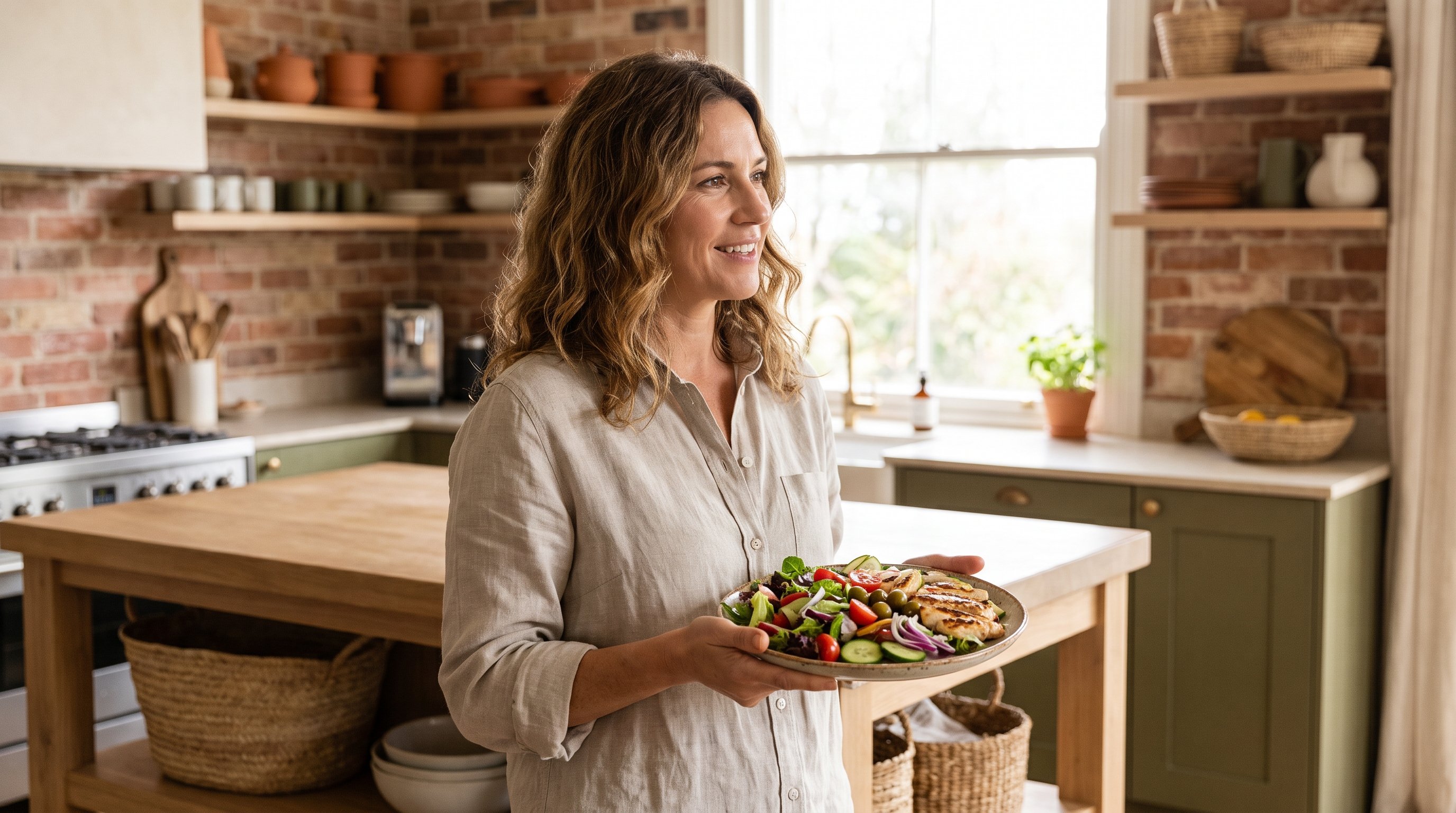
None of these require tracking anything. They just change the conditions around the meal so a sensible portion becomes the easy default rather than something you have to negotiate with yourself.
A Day of Meals Using Plate-Based Portions
Here's what a full day looks like when portions are judged by sight rather than scale.
A Sample Day
- Breakfast - a bowl roughly the size of two cupped hands, built around yoghurt, fruit and a scattering of nuts.
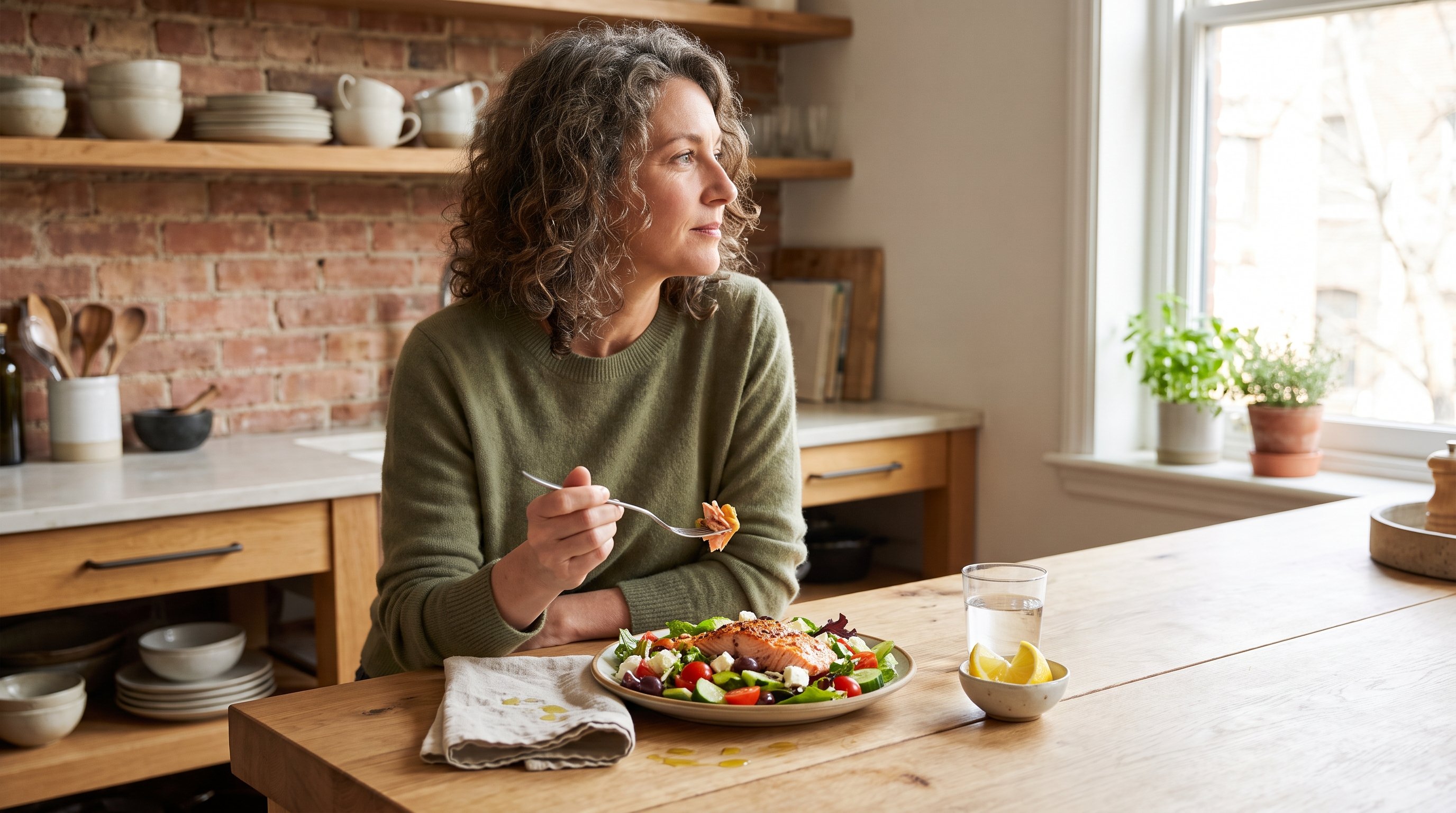
- Lunch - a plate half vegetables or salad, a palm-sized portion of protein, and a fist-sized serving of whole grains.
- Afternoon - a piece of fruit or a small handful of nuts if hunger shows up before dinner.
- Dinner - the same half-plate structure as lunch, with olive oil used for cooking instead of measured out by the spoonful.
- Evening - a small square of dark chocolate or a few olives, eaten slowly and off a small plate rather than straight from the packet.
Fitting Portion Awareness Into an Ordinary Week
None of this requires a special shopping list or a kitchen overhaul. It just means serving meals the same way most days, whether you're cooking from scratch or reheating leftovers.
On genuinely hectic days, even picking one meal to plate with the half-plate method is enough to keep the habit alive rather than abandoning it altogether.
A meal plan built around food you already like makes this easier, because the recipes themselves tend to land close to the right portion without you having to think about it. No More Diet includes Mediterranean-inspired recipes designed around real plates and real appetites, rather than numbers you'd have to track separately.
When Portion Awareness Starts to Feel Automatic
Early on, plate-based portioning can feel like guesswork, especially if you're used to trusting a number over your own judgement.
Most people find the half-plate habit becomes second nature well before other changes do, simply because it's visual and repeated at almost every meal.
The point where people tend to drop it is right after a holiday, a busy work stretch or an illness disrupts the routine. Picking the habit back up the next meal, rather than waiting for a fresh start on a Monday, is what keeps it going long term.
Mistakes That Undo Plate-Based Portion Control
Eating Straight From the Packet
It's hard to judge a portion you never actually plated. Tip a serving onto a plate or into a bowl before eating, even for snacks.
Treating 'protein' As the Only Thing That Matters
A plate that's mostly meat with a token side of vegetables isn't the same structure as a true half-plate split. Rebuild the plate so vegetables genuinely take up half the space, not just a garnish.
Eating While Distracted
Scrolling or watching something during meals makes it easy to miss the point where you're actually full. Even a few distraction-free minutes at the start of a meal helps you notice fullness before the plate's empty.
Skipping Meals and Overcorrecting Later
Going hungry for hours tends to make the next meal's portion much harder to judge by sight. Eating at roughly regular times keeps the half-plate method accurate instead of fighting against intense hunger.
Making Portion Control Simpler With No More Diet
Plate-based portioning works, but knowing what to put on the plate in the first place is where most people get stuck.
No More Diet gives you a customized book built around your goals, body and eating style, with Mediterranean recipes matched to your preferences so the right portions happen by default rather than by calculation. The book also includes a dedicated section focused on your specific goal, plus practical lifestyle advice on eating and staying consistent without overthinking every meal.
Eat Without Stress
Eat Clean Every Day
Building a Portion Habit That Lasts Past This Week
Start with one meal a day and one visual cue, usually the half-plate split, and let it run on repeat before adding anything else.
No More Diet can take over the thinking part, since the recipes are already built around sensible portions, leaving you to focus on actually sitting down and eating the meal.
FAQ
It works through the same mechanism as calorie counting, just using visual cues instead of numbers to land on a similar result. The half-plate method and eating slowly both reduce the amount eaten without requiring any tracking.
It's more precise on paper, but precision only helps if you keep doing it, and most people stop logging within a short stretch. A slightly less exact method you'll actually use most days tends to beat a precise one you abandon.
You can still apply the same split mentally, asking for extra vegetables or setting aside part of a large portion before you start eating. No More Diet's lifestyle advice is built around real-life situations like this, not just home-cooked meals.
It varies, but repeating the same visual structure at most meals is usually what makes it feel automatic rather than a deliberate step. Dropping it after a disrupted week and picking it straight back up at the next meal keeps the habit from unravelling.
Share this post