Is the Mediterranean Diet Sustainable? What Keeps It Going
By:Author:No More Diet Editorial
Updated on:October 18, 2026

- A Week That Shows the Pattern Holding Up
- How Often the Core Foods Need to Show Up
- Why Everyday Substitution Outlasts Total Elimination
- Fitting Mediterranean Eating Into an Actual Schedule
- Who This Way of Eating Suits and How to Adjust It
- When This Pattern Stops Feeling Like a Decision
- Making Mediterranean Eating Stick With No More Diet
- Keeping the Pattern Going Past the First Month
Yes, it holds up for the long run, and the reason is simple: it's built on substitution, not restriction. You swap butter for olive oil, red meat for fish and legumes, white bread for whole grains, and nothing on your plate gets labelled off-limits.
That matters because diets that ban entire food groups tend to collapse the moment life gets busy or stressful. A pattern you can keep eating at a birthday dinner or a work lunch is a pattern you'll still be eating in a year.
This article covers what a realistic week looks like, how often the key foods should show up, why swaps beat elimination, how to fit it around a packed schedule, who needs to adapt it, and when it starts to feel like second nature instead of effort.
A Week That Shows the Pattern Holding Up
The easiest way to judge whether something is sustainable is to look at it across seven days, not one perfect meal.
A Sample Week
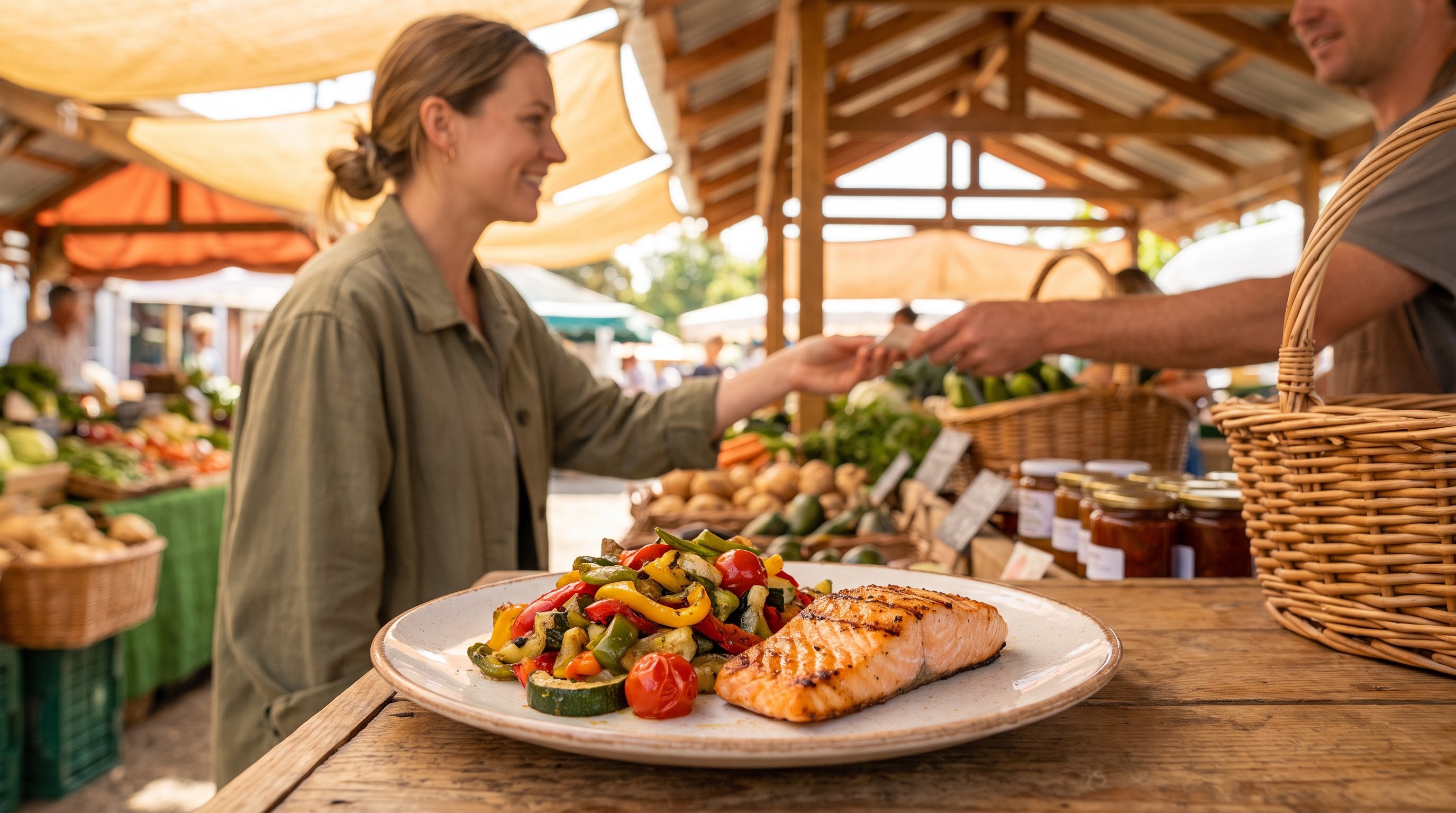
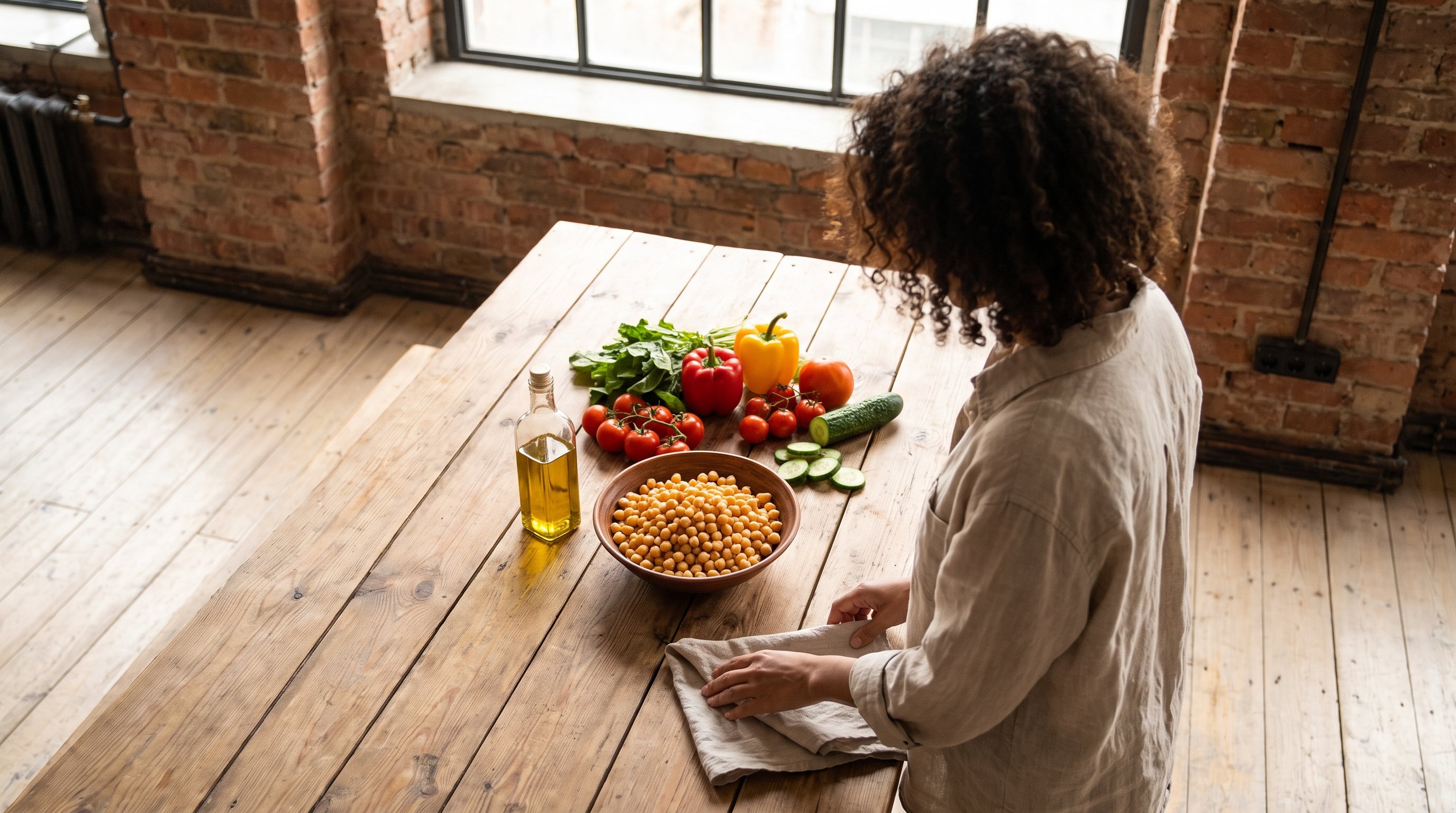
- Monday - Grilled vegetables, chickpeas, olive oil dressing
- Tuesday - Baked fish with greens and a wholegrain side
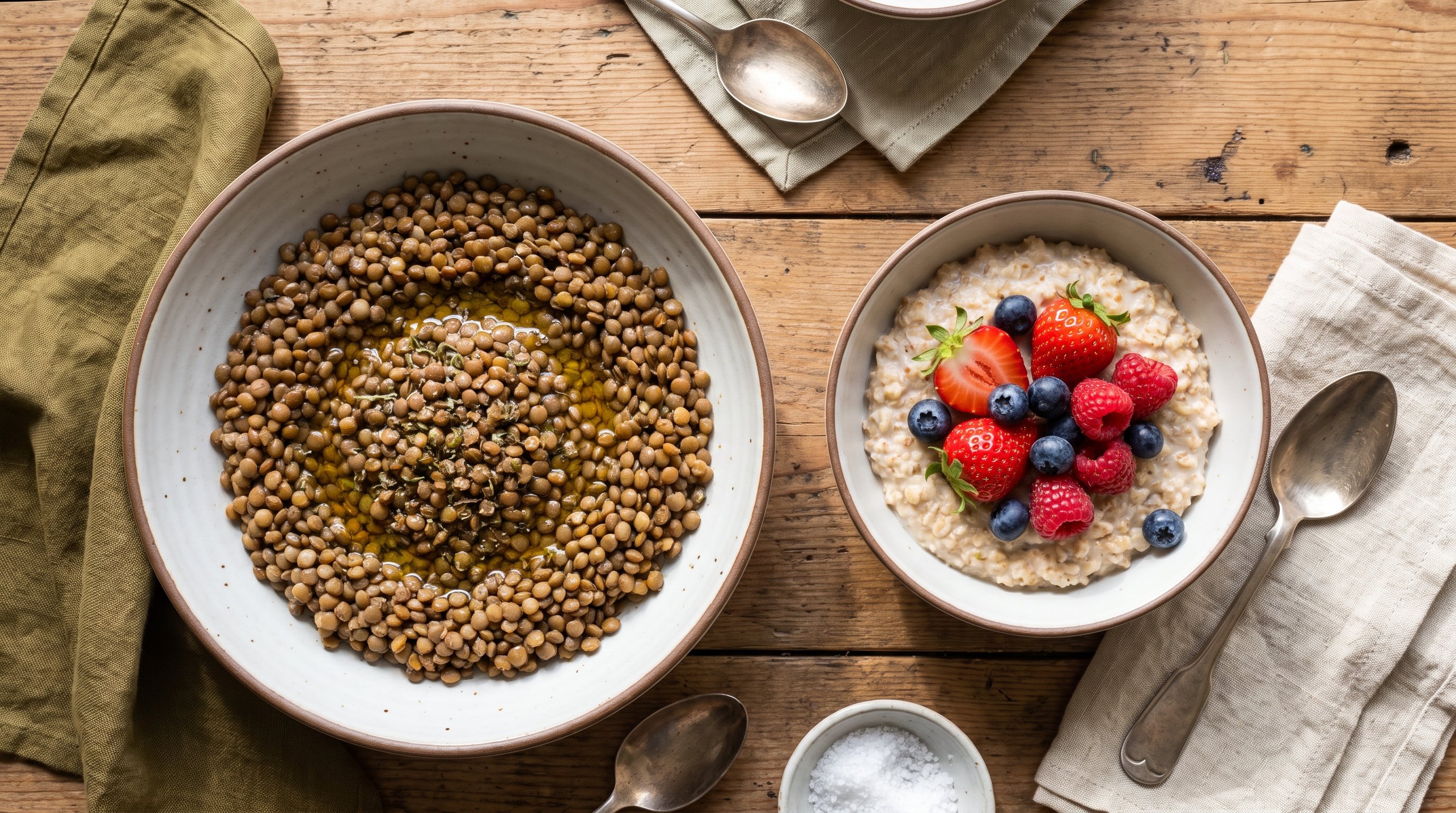
- Wednesday - Lentil soup with crusty bread and a salad
- Thursday - Chicken, roasted vegetables, yoghurt on the side
- Friday - Pasta with tomatoes, olives and a drizzle of oil
- Saturday - A simpler plate, fewer vegetables, more flexibility
- Sunday - Beans, seasonal vegetables and fruit for dessert
Nothing on that list requires a special shop or an unusual skill, which is a large part of why it keeps going past the first fortnight.
How Often the Core Foods Need to Show Up
A Rough Weekly Frequency
You don't need every meal to be picture-perfect for this way of eating to work, you need the pattern to repeat often enough to become automatic.
| Food Group | Rough Frequency |
|---|---|
| Vegetables and legumes | Most meals, daily |
| Olive oil as main fat | Daily, in cooking |
| Fish or seafood | Two to three times a week |
| Red meat | Occasional, not daily |
| Sweets or desserts | A few times a week |
Why Everyday Substitution Outlasts Total Elimination
Picture two people trying to eat better. One cuts out carbs, dairy and sugar entirely from day one. The other just swaps butter for olive oil and adds fish twice a week while keeping everything else roughly the same.
The second person has a plate that still looks and tastes like food they enjoy, so they keep eating it next month and the month after.
The first person is managing a list of rules, and rules get broken the first time a dinner invitation or a bad day shows up. Substitution asks less of you day to day, which is exactly why it tends to survive contact with real life.
Fitting Mediterranean Eating Into an Actual Schedule
A pattern only counts as sustainable if it survives a week with no time to cook, a weekend away, or a fridge that's gone half empty.
That means keeping a few staples on hand - tinned beans, olive oil, frozen fish, whatever vegetables are easiest to grab - so a reasonable meal is never more than ten minutes away.
This is where a meal plan built around food you already like makes the difference between good intentions and an actual Tuesday dinner, and it's also where No More Diet is designed to help, by giving you recipes matched to your own eating preferences instead of a generic list you have to adapt yourself.
Who This Way of Eating Suits and How to Adjust It
If You're Just Starting Out
Start with one swap - the oil you cook with - before touching anything else, because one change you can keep beats five you abandon by Thursday.
If Your Week Is Already Full
Lean on simple combinations - tinned fish, a tin of beans, a bag of salad - rather than recipes with ten ingredients, since the goal is repeatable, not impressive.

If You're Over 50
The same pattern applies, just with more attention to protein at each meal and vegetables you actually enjoy chewing and digesting.
If You're Cooking for a Family
Build meals around a shared base - a tray of roasted vegetables, a pot of beans - and let each person add their own extras, so you're not cooking two separate dinners.
When This Pattern Stops Feeling Like a Decision
Be wary of anyone promising a fixed number of weeks, because the honest answer is that it varies by how often you cook and how much you're changing at once.
What tends to happen is that the early weeks feel like a conscious choice at every meal, and somewhere along the way reaching for olive oil or tinned beans stops requiring a decision at all.
The drop-off point is usually week two or three, right when the novelty fades and the plate starts to feel ordinary - which, oddly, is the sign it's working, not the sign to quit.
Making Mediterranean Eating Stick With No More Diet
Generic advice tells you to eat more vegetables and less red meat, which is true and also not very useful at 6pm with an empty fridge.
No More Diet turns that generic advice into a book built specifically for your goals, body and eating style, with Mediterranean recipes matched to what you'll actually cook and a dedicated section focused on your specific goal.
It also includes practical lifestyle and nutrition advice on eating, moving and staying consistent without overthinking every meal, plus the structure and motivation to keep going once the initial interest wears off.

Eat Without Stress
Eat Clean Every Day
Keeping the Pattern Going Past the First Month
Sustainability isn't a mystery, it's just a pattern that asks little enough of you that you keep repeating it without a reminder.
Pick one swap this week - the oil, the fish, the extra vegetables - and let it repeat before adding the next one, and if you want that built out into a full plan rather than a guess, No More Diet gives you the recipes and structure to carry it forward.
FAQ
It tends to hold up better than restrictive diets because it's built on substitution rather than elimination, so there's nothing you're forced to permanently avoid. The real test is whether the swaps fit your own cooking habits, not whether you can follow someone else's exact meal plan.
Not necessarily - a tin of beans, a fillet of fish and a bag of pre-washed greens take about as long as anything else you'd throw together. The time cost is mostly in the first week or two, while you're still learning which combinations you like.
Start with the easiest swap available - the oil you cook with or the snack you reach for - rather than trying to overhaul every meal at once. No More Diet is built around recipes matched to your own eating style, so the starting point is whatever's realistic for you, not a rigid list.
Most people quit around week two or three, right when the initial motivation fades and the meals start to feel routine. That's usually a sign the habit is forming, not a reason to stop - routine is what sustainable actually looks like.
Share this post