Mediterranean Eating for Women Over 50: A Realistic Approach
By:Author:No More Diet Editorial
Updated on:October 18, 2026

- A Day of Mediterranean Meals You Can Copy
- How Often These Foods Should Show Up Each Week
- Why Everyday Swaps Beat Strict Food Rules
- Making Mediterranean Eating Fit a Full Schedule
- Who This Pattern Suits After 50 and How to Adjust It
- When This Way of Eating Starts to Feel Automatic
- Making Mediterranean Eating Simpler With No More Diet
- Starting Your Own Mediterranean Pattern This Week
Mediterranean eating for women over 50 works best as a pattern of everyday swaps, not a strict plan with rules to memorise. Swap refined grains for whole ones, use olive oil instead of butter, and build meals around vegetables, legumes and fish more often than not.
The mechanism is simple substitution. You are not removing entire food groups or counting every gram, you are changing what fills the plate most of the time, which naturally shifts the balance of what you eat across a week.
This article covers what a typical day looks like, how often to repeat core foods, why swapping beats strict elimination, and how to adapt the pattern around a busy or changing life.
A Day of Mediterranean Meals You Can Copy
Here is one version of a full day built around the same swaps described above, so you can see how they fit together rather than sit in isolation.
A Sample Day
- Breakfast - Greek yoghurt with oats and a handful of walnuts
- Lunch - A salad of leafy greens, chickpeas, tomatoes and olive oil
- Afternoon snack - A piece of fruit with a few almonds
- Dinner - Grilled fish with roasted vegetables and a small portion of whole grains
- Evening - Herbal tea, or a small square of dark chocolate if you want something sweet
Nothing on this list is unusual or hard to find, which is part of the point. The pattern works because it repeats ordinary food, not because any single meal is special.
How Often These Foods Should Show Up Each Week
Building a Weekly Rhythm
Rather than aiming for perfection every day, it helps to think in terms of a week. Some foods belong almost daily, others a few times a week, and a few are occasional.
| Food Group | How Often |
|---|---|
| Vegetables and fruit | Most meals, daily |
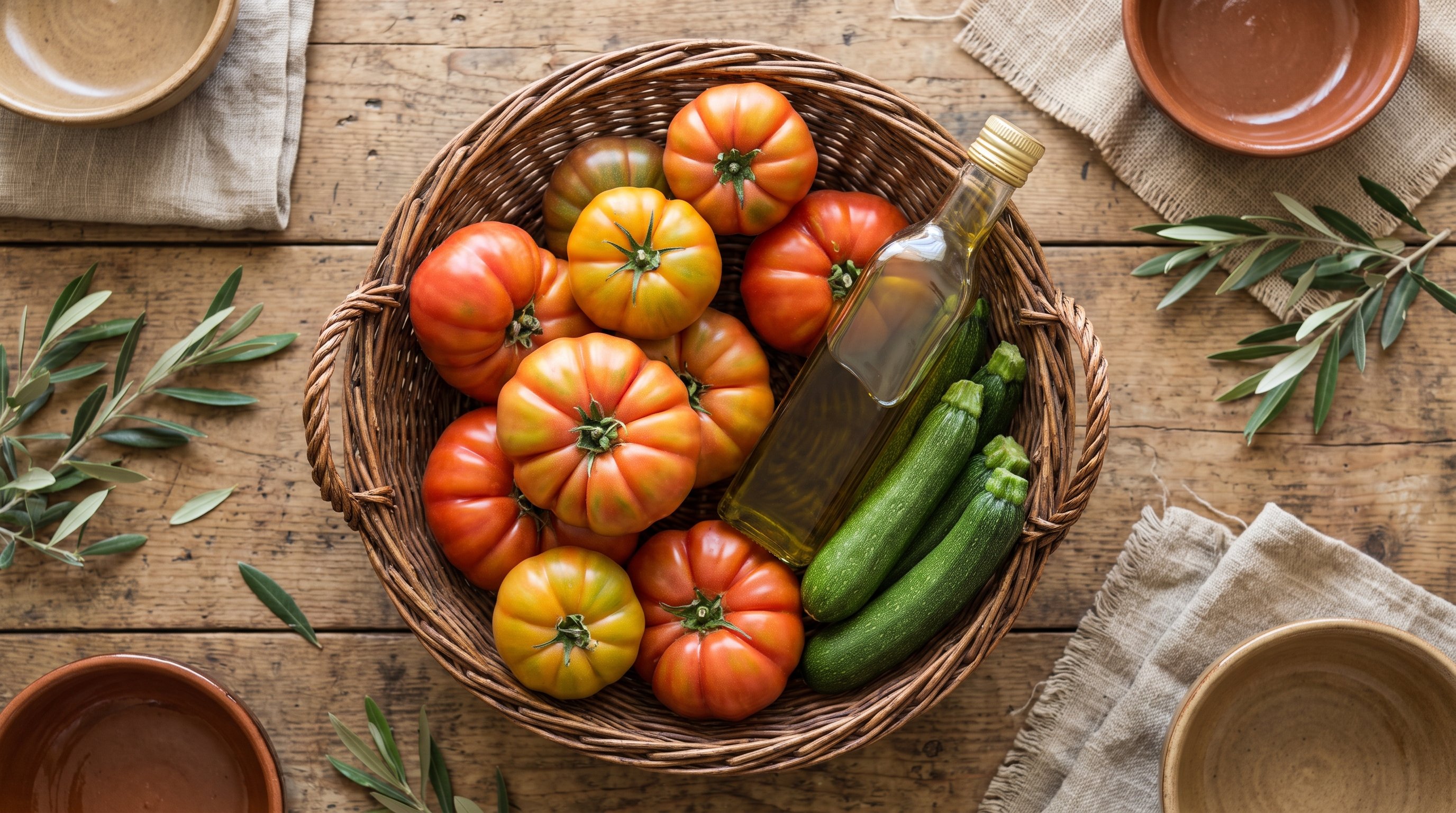
| Olive oil | Daily, in place of butter |
| Legumes and whole grains | Several times a week |
| Fish | Two to three times a week |
| Red meat and sweets | Occasionally |
There is no need to hit these numbers precisely every single week. The rhythm is a guide, not a scorecard, and missing a day does not undo the pattern.
Why Everyday Swaps Beat Strict Food Rules
Compare two approaches: a restrictive diet that cuts out whole food groups, versus swapping ingredients while keeping meals familiar. The restrictive version demands constant vigilance and leaves little room for a normal dinner out.
The swap-based version asks for one decision per meal, like choosing olive oil over butter or fish over processed meat. Fewer decisions mean fewer chances to feel like you have failed, which is often what makes a stricter plan fall apart.
Adherence is the whole game. A pattern you can actually repeat most weeks will outperform a stricter one you only manage for a few days before giving up.
Making Mediterranean Eating Fit a Full Schedule
Life after 50 often means juggling work, family, caring responsibilities or simply less patience for complicated cooking. The swaps above are designed to survive a busy week because they do not require special ingredients or long prep time.
A tin of chickpeas, a bag of frozen fish fillets and a bottle of olive oil can carry you through several dinners without much planning. This is also where a structured resource like No More Diet can help, since a meal plan built around food you already like removes the guesswork of deciding what to cook each night.
Having a plan to fall back on matters most on the days when cooking feels like one task too many.
Who This Pattern Suits After 50 and How to Adjust It
If You Are New to This Way of Eating
Start with one swap at a time, like switching to olive oil for cooking before worrying about anything else. Adding too many changes at once is a common reason people give up in the first week.
If You Are Short on Time
Lean on simple formats: a salad with tinned beans, or fish and vegetables roasted on one tray. These take minutes to assemble and still follow the same pattern.

If You Are Managing a Health Condition
Mediterranean eating is food-first, not a treatment, so any specific health concern should be discussed with your GP rather than solved through diet alone. The pattern can still sit alongside whatever guidance you already follow.
If You Are Cooking for One
Batch-cook grains and legumes once, then mix them with different vegetables and proteins through the week so meals do not feel repetitive. Smaller portions of fish or meat also cost less when you are not cooking for a family.
When This Way of Eating Starts to Feel Automatic
Most people quit a new eating pattern in the first couple of weeks, usually because they expect it to feel effortless immediately. It does not, at first, because old habits are still the default your hands reach for.
Give the swaps time to become the normal choice rather than the deliberate one. There is no fixed point where this happens, but it tends to arrive once a few meals have become repeatable without much thought.
Expect some weeks to go better than others. That unevenness is normal and does not mean the pattern has stopped working.
Making Mediterranean Eating Simpler With No More Diet
Knowing the pattern is one thing, building it into a week that actually happens is another. This is where a dedicated plan removes a lot of the daily decision-making.
No More Diet offers Mediterranean recipes tailored for you, built around your goals and the way you already like to eat, along with a dedicated section focused specifically on your goal so the plan does not feel generic. It also includes practical lifestyle advice on eating, moving and staying consistent, without asking you to overthink every meal.
Instead of starting from a blank page each week, you get a structure that is already built around food you will actually want to eat.

Eat Without Stress
Eat Clean Every Day
Starting Your Own Mediterranean Pattern This Week
Pick one meal today and make one swap: olive oil instead of butter, or fish instead of processed meat. That single change is enough to start, and it costs nothing in time or effort.
No More Diet exists for the moments after that first swap, when you need a structure to keep going rather than a new rule to remember.
FAQ
It can support it when used as a sustained pattern of swaps rather than a short-term fix, since the food choices themselves lean toward vegetables, fibre and healthy fats. No specific result or timeframe can be promised, since every person's situation is different.
No, the whole approach is built on substitution rather than elimination, so there are no banned foods or strict rules to follow. The focus stays on what you add and swap, not on what you are forbidden from eating.
Keep a few simple formats on hand, like tinned beans with salad or frozen fish with roasted vegetables, so a busy week does not mean abandoning the pattern entirely. A resource like No More Diet can also take the planning off your hands with recipes already built around your preferences.
Most people quit in the first couple of weeks because they expect the new pattern to feel easy right away, and it does not. Sticking with a few repeatable meals, rather than trying to change everything at once, makes it easier to get past that early stretch.
Share this post