Fiber Rich Foods List: A Simple Guide to Eating More Daily
By:Author:No More Diet Editorial
Updated on:October 18, 2026
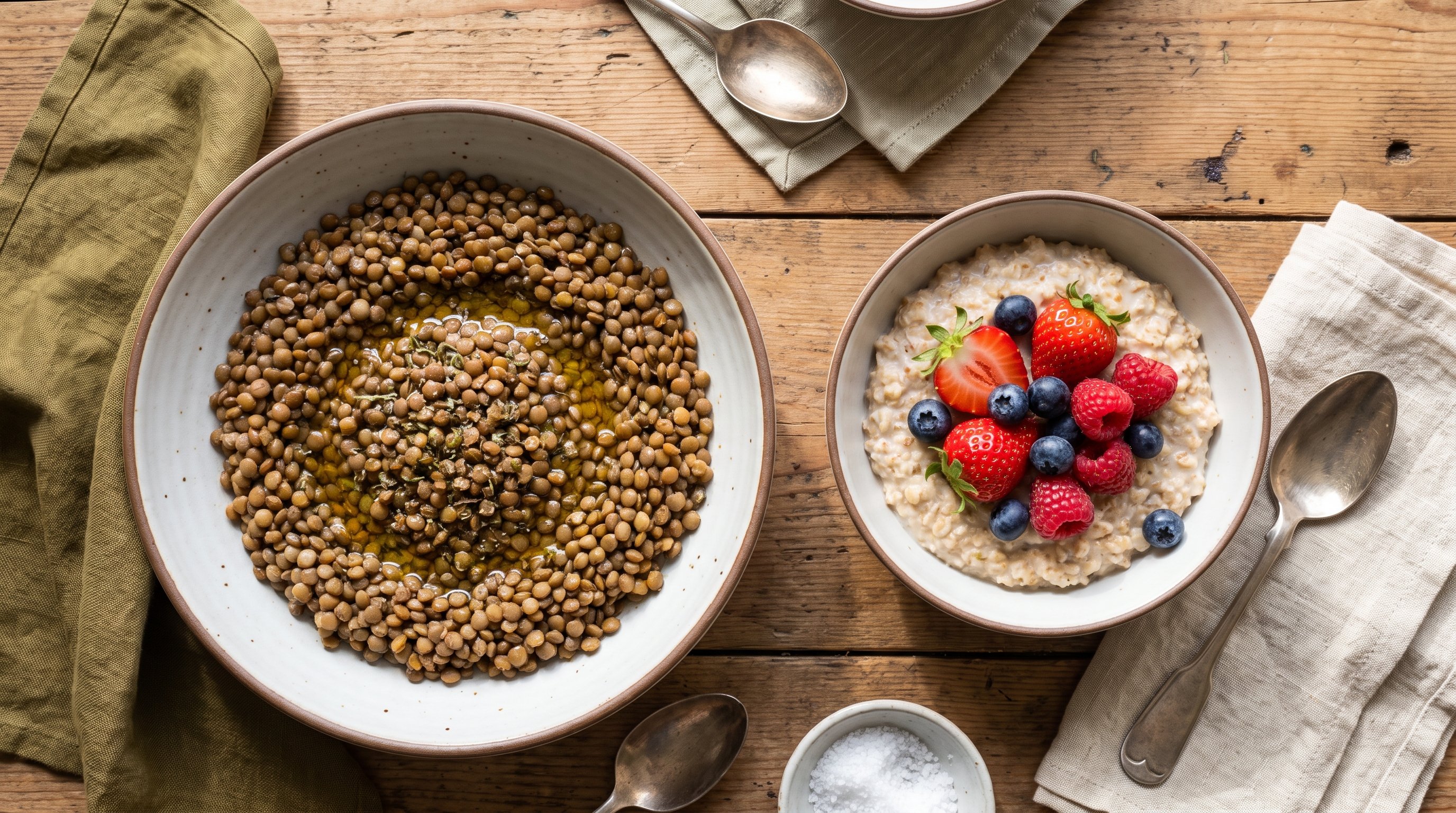
- Building Your Own Fiber Rich Foods List Step by Step
- How Much Fiber Rich Food Actually Belongs on Your Plate
- Fitting More Fiber Rich Foods Into a Normal Week
- A Four-Week Starting Plan for Eating More Fiber
- When Eating More Fiber Starts to Feel Normal
- Mistakes That Quietly Undo a Fiber Rich Diet
- Making a Fiber Rich Routine Easier With No More Diet
- Carrying a Fiber Rich Habit Past the First Month
A fibre rich foods list usually centres on legumes, whole grains, vegetables, fruit with the skin on, nuts and seeds - foods that keep more of their natural structure intact.
Fibre is the part of plant food your body cannot fully break down, so it moves through digestion slowly, adds bulk, and feeds the bacteria living in your gut.
This guide covers which foods to reach for, how much is reasonable, a four-week way to build the habit, and the mistakes that usually derail it.
Building Your Own Fiber Rich Foods List Step by Step
You do not need a spreadsheet to eat more fibre. A short, repeatable process is enough to get most meals there.

A Simple Way to Build the List
- Start with legumes - lentils, chickpeas and beans are some of the most concentrated fibre sources you can cook with.
- Swap refined grains for whole ones - choose whole wheat pasta, brown rice or oats over the refined versions you already buy.
- Keep the skin on - apples, potatoes and pears carry extra fibre in their skin, so leave it on when you can.
- Add a handful of nuts or seeds - sprinkle them on porridge, salads or yoghurt rather than treating them as a separate snack.
- Stack vegetables into meals you already cook - toss extra vegetables into sauces, soups and stir-fries instead of adding a whole new dish.
- Choose whole fruit over juice - juicing removes most of the fibre, so the whole fruit does more work.
- Build toward variety, not just volume - different plants carry different types of fibre, so rotating what you eat matters as much as eating more of one thing.
None of these steps need special shopping trips - most of them just change what already goes in the trolley.
How Much Fiber Rich Food Actually Belongs on Your Plate
There is no single magic number, but a useful habit is to make sure at least one fibre rich food shows up at every meal.
A Quick Reference for Everyday Portions
The table below gives a rough sense of where fibre sits across common foods, so you can see which ones pull more weight per serving.
| Food | Typical Portion | Role on the Plate |
|---|---|---|
| Lentils, cooked | Half cup | Main fibre source |
| Oats, dry | Half cup | Breakfast base |
| Raspberries | One cup | Fruit with skin |
| Almonds | Small handful | Snack or topping |
| Broccoli, cooked | One cup | Side vegetable |
Spread portions like these across breakfast, lunch and dinner and fibre starts adding up without you having to think about a single total.
Fitting More Fiber Rich Foods Into a Normal Week
Real weeks involve rushed mornings, leftovers and takeaway nights, so the fibre habit has to survive all of that or it will not survive at all.
The easiest approach is to pick two or three meals you already cook regularly and quietly upgrade them - add beans to the chilli, swap white rice for brown, keep fruit skins on.

A tailored meal plan built around food you already like makes this easier, because the swaps are chosen to match your own eating style rather than asking you to start from scratch.
That is the approach behind No More Diet - Mediterranean-style meals, which naturally lean on vegetables, legumes and whole grains, built around what you already enjoy eating.
A Four-Week Starting Plan for Eating More Fiber
The order of these changes matters more than the exact amounts - each week builds on the one before it.
| Stage | What To Focus On |
|---|---|
| Week 1 | Swap one refined grain for a whole grain each day |
| Week 2 | Add legumes to two meals you already cook |
| Week 3 | Keep skins on fruit and vegetables where possible |
| Week 4 | Add a handful of nuts or seeds to one meal daily |
By the end of four weeks, fibre rich foods are showing up in several meals a day without any single change feeling drastic.
When Eating More Fiber Starts to Feel Normal
The first week or two can feel like extra effort, mostly because you are noticing food choices you used to make on autopilot.
Digestion can also feel different while your body adjusts to more fibre, which is normal and usually settles as intake increases gradually rather than all at once.
Most people find the habit stops feeling like a decision once a few fibre rich swaps have been repeated enough times to become the default, rather than the exception.
Mistakes That Quietly Undo a Fiber Rich Diet
Increasing Fibre Too Fast
Jumping from almost no fibre to a very high intake overnight can be uncomfortable, so build up over a few weeks instead of one weekend.
Forgetting Water
Fibre needs fluid to do its job properly, so pair bigger portions of beans, oats and vegetables with drinking water through the day.
Relying on Supplements Instead of Food
A powder or tablet cannot replace the variety of fibre types found across legumes, grains, fruit and vegetables, so let food do most of the work.
Only Counting Fruit and Vegetables
Whole grains, legumes, nuts and seeds carry meaningful fibre too, so a list that stops at produce is leaving a lot on the table.
Treating It As a Short-Term Fix
Fibre works best as an ongoing pattern, not a one-week push before going back to old habits.
Making a Fiber Rich Routine Easier With No More Diet
Knowing which foods carry fibre is one thing - building them into meals you will actually cook again is another.
No More Diet offers Mediterranean-style recipes matched to your own eating preferences, so fibre rich ingredients like legumes, whole grains and vegetables show up in meals that fit how you already like to eat.
There is also a dedicated section built around your specific goal, along with practical lifestyle advice on eating and staying consistent without overthinking every plate.
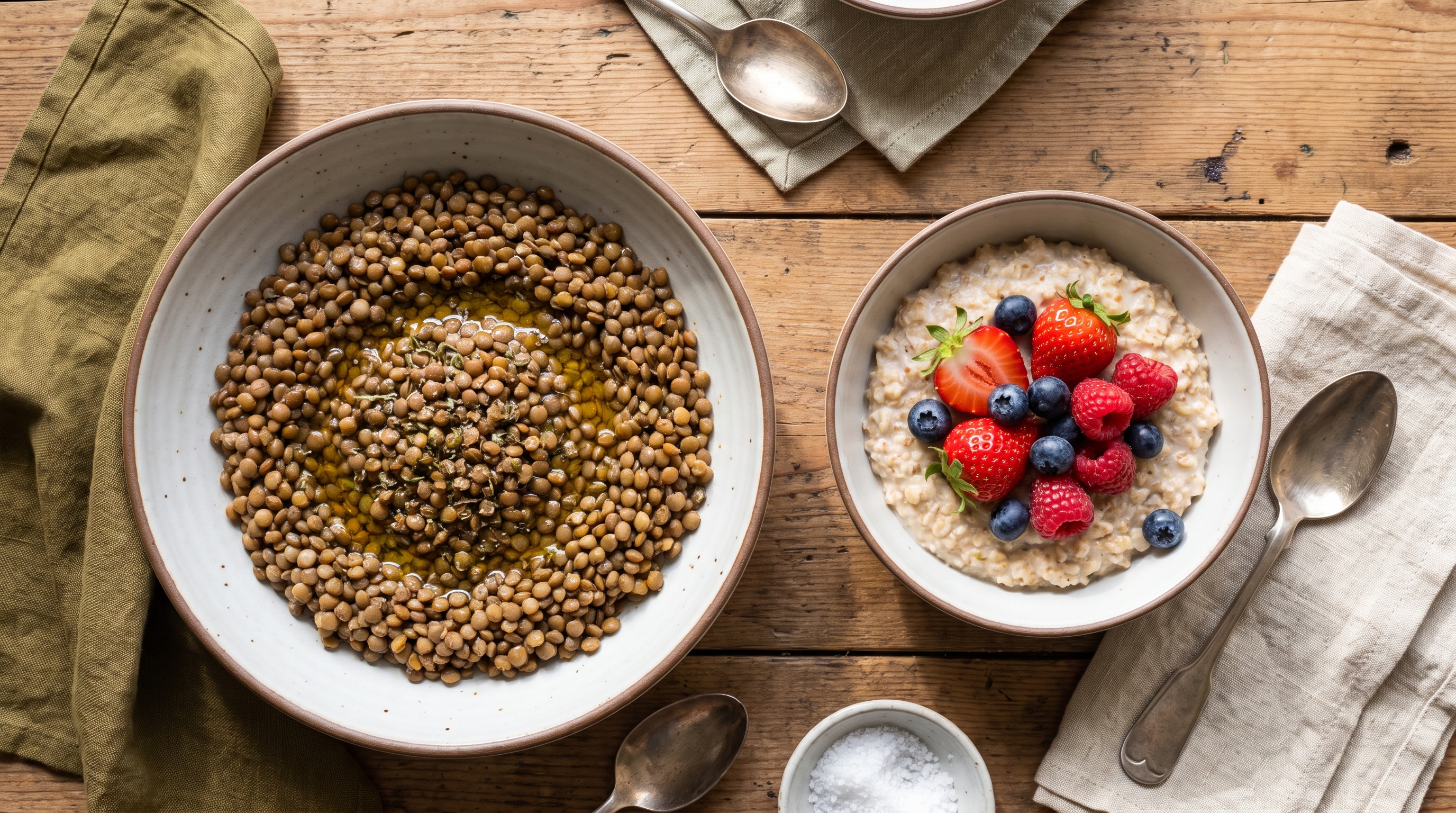
Eat Without Stress
Eat Clean Every Day
Carrying a Fiber Rich Habit Past the First Month
Pick one meal today - breakfast, lunch or dinner - and add a single fibre rich food to it, whether that is lentils, oats, a handful of nuts or vegetables with the skin left on.
Repeat that one small change until it feels automatic, then add another, and the overall fibre rich foods list in your kitchen will grow on its own, with No More Diet there to make the recipes feel less like a chore.
FAQ
Legumes, oats, whole grains, fruit with the skin on and vegetables are the most reliable starting points. They are easy to add to meals you already cook, which makes the change feel manageable rather than disruptive.
Fibre rich foods tend to add bulk and take longer to eat, which can make meals feel more satisfying, but no single food group works in isolation. A broader pattern of eating, like the one behind No More Diet's Mediterranean-style approach, matters more than any one ingredient.
Not if the changes are small and attached to meals you already make. Swapping white rice for brown or adding beans to a sauce takes no extra time once it becomes routine.
Increasing fibre too quickly without enough water can cause bloating or discomfort while digestion adjusts. Building up gradually over a few weeks, rather than all at once, usually settles this.
Share this post