Mediterranean Eating For Diabetics: A Calmer Way To Manage Blood Sugar
By:Author:No More Diet Editorial
Updated on:October 18, 2026
- What a Mediterranean Day Looks Like for Blood Sugar
- How Often to Include Fibre, Fish and Healthy Fats
- Why Everyday Swaps Beat Cutting Out Carbs Entirely
- Fitting Mediterranean Meals Around Blood Sugar Checks and Work
- Who This Eating Pattern Suits and How to Adjust It
- When This Pattern Starts to Feel Automatic
- Supporting Mediterranean Eating for Diabetics With No More Diet
- Making This Way of Eating Stick for the Long Run
Mediterranean eating for diabetics means building meals around vegetables, whole grains, legumes, fish and olive oil instead of refined carbs and processed snacks, while keeping portions in mind rather than eliminating food groups.
The mechanism is simple: meals higher in fibre, healthy fats and protein slow down how quickly food turns into blood sugar, so swapping white bread for wholegrain or chips for a side salad changes the shape of a meal without demanding a whole new diet.
This article covers what a typical day can look like, how often to include key foods, why swaps beat strict elimination, and how to make the pattern work around a real schedule.
What a Mediterranean Day Looks Like for Blood Sugar
A day built around this pattern does not need to look complicated. Here is one version that someone managing blood sugar could copy without a shopping list overhaul.
A Sample Day of Meals
- Breakfast - plain yoghurt with berries, chopped walnuts and a drizzle of olive oil
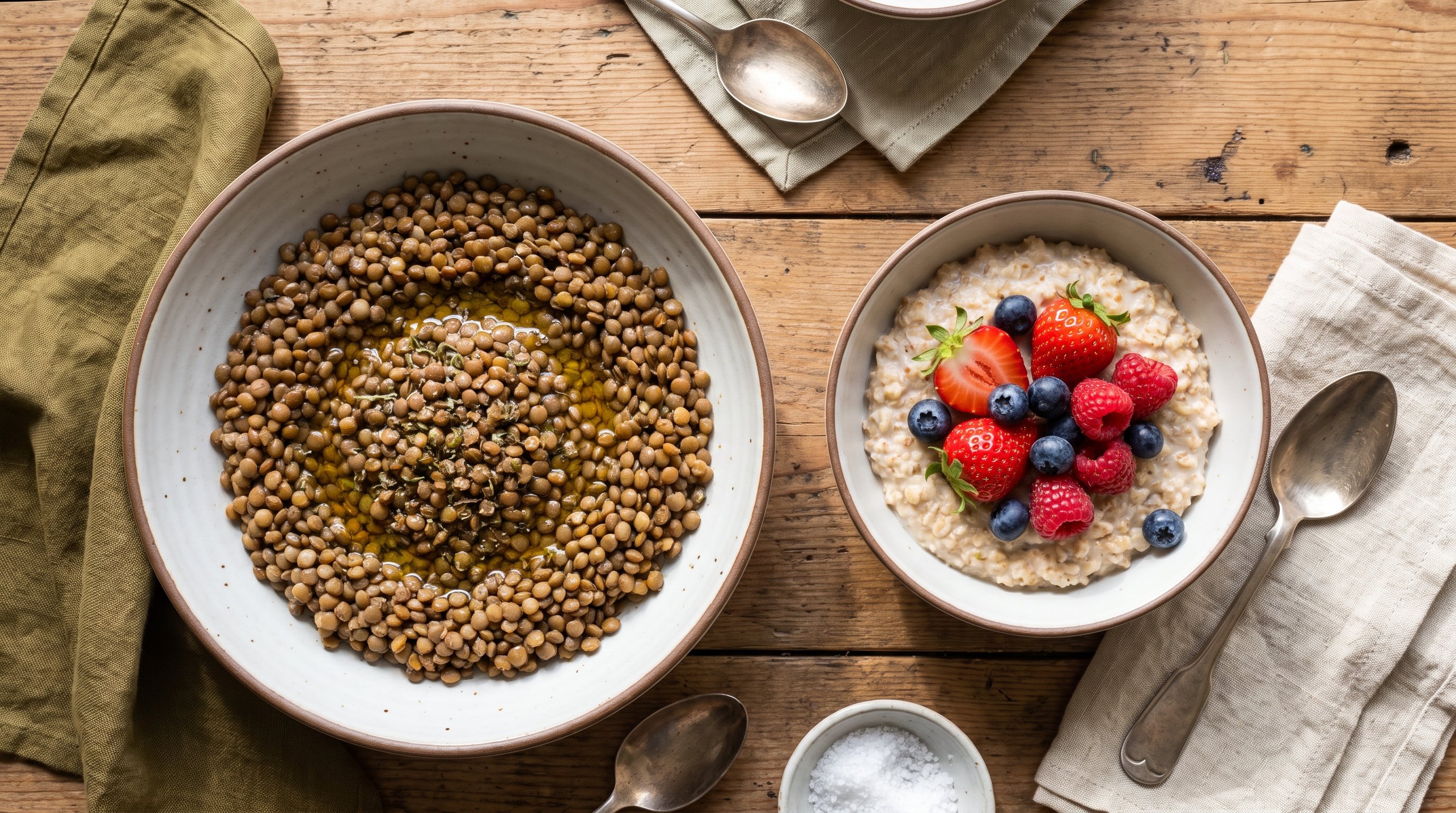
- Lunch - a bowl of lentils, cucumber, tomato and feta dressed with olive oil and lemon
- Afternoon - a small handful of almonds or an apple with no added sugar
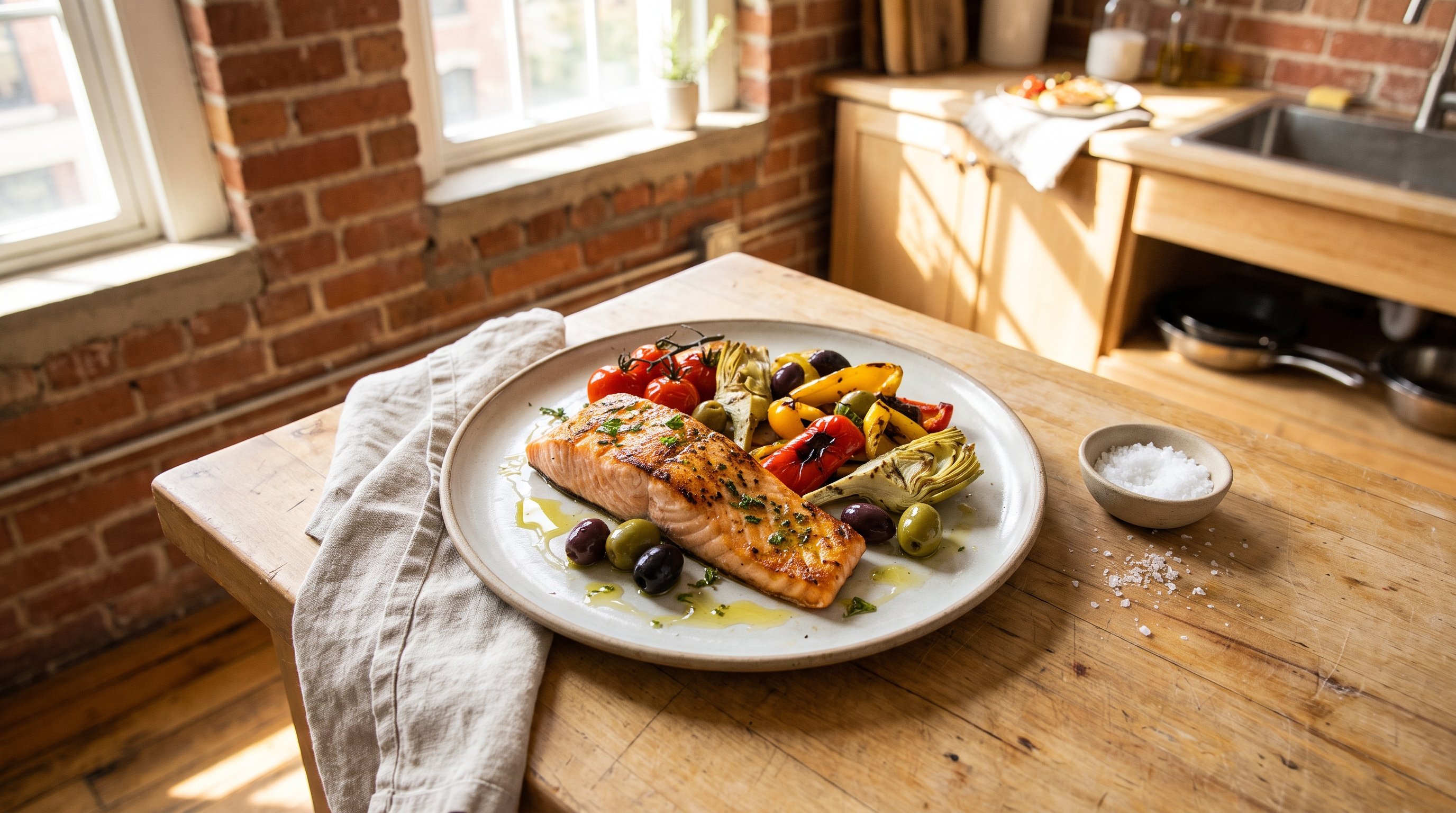
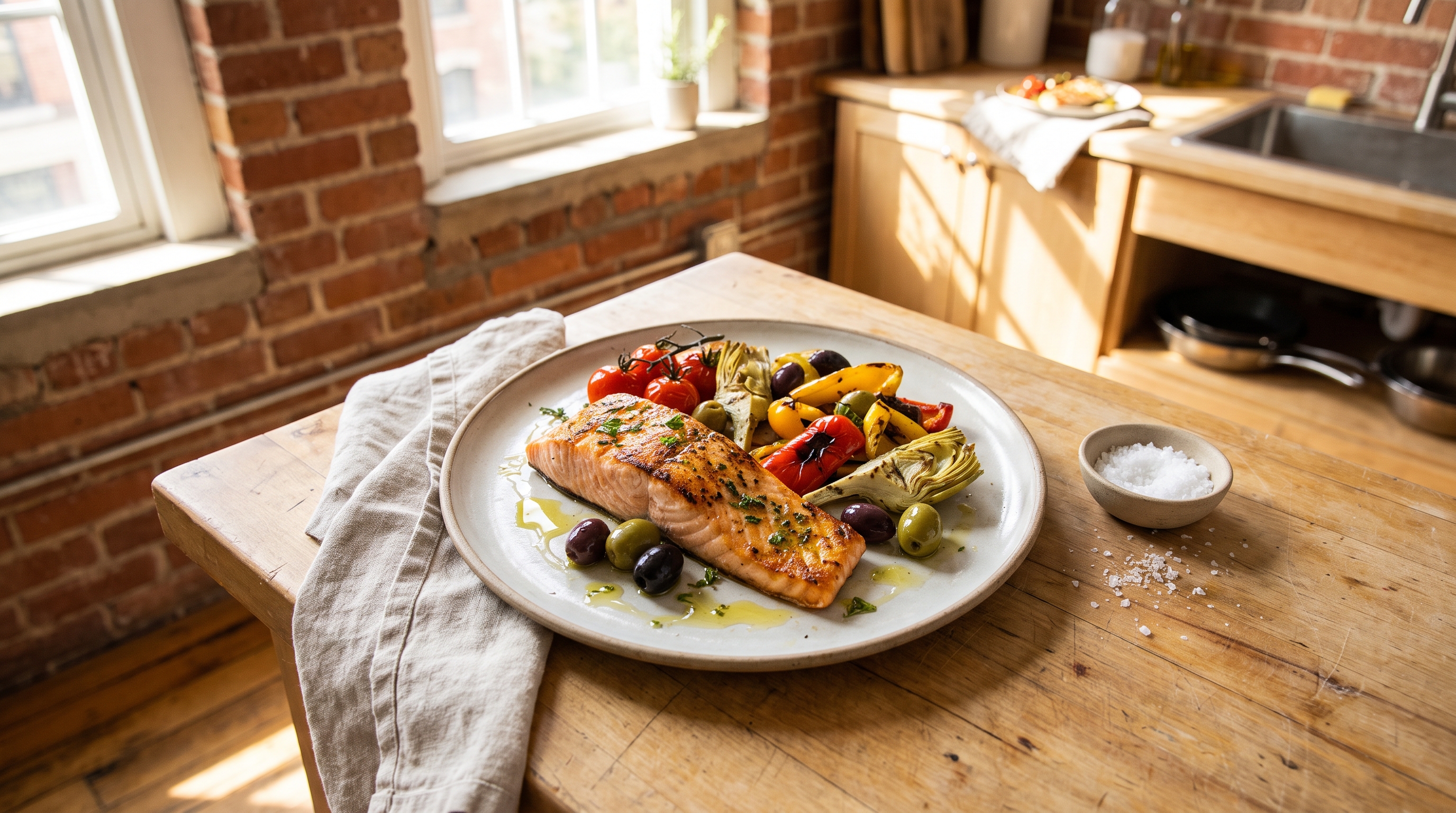
- Dinner - grilled fish, a side of roasted vegetables and a small portion of wholegrain couscous
- Evening - herbal tea or water, skipping the sugary dessert in favour of fresh fruit
Nothing on that list is rare or expensive, and nothing demands weighing food to the gram.
How Often to Include Fibre, Fish and Healthy Fats
A Simple Weekly Frequency Guide
Rather than counting every gram, it helps to think in terms of how often each food group shows up across a week.
| Food Group | How Often |
|---|---|
| Vegetables and legumes | Most meals, daily |
| Wholegrains over refined | Daily, modest portions |
| Fish | Two to three times weekly |
| Olive oil as main fat | Daily, in cooking and dressing |
| Sweets and refined snacks | Occasional, not daily |

This is a frequency guide, not a prescription, and it can flex around what is already in the fridge.
Why Everyday Swaps Beat Cutting Out Carbs Entirely
Cutting carbohydrates out completely is one route, and it does change numbers in the short term for some people.
The problem is sticking with it. Eliminating an entire food group for the long haul is hard to sustain at a family dinner, a birthday, or just an ordinary Tuesday when bread is already on the table.
Swapping white rice for a smaller portion of brown rice, or white bread for a dense wholegrain loaf, keeps the meal familiar while changing how it behaves in the body.
A swap-based approach also means there is no single forbidden food hanging over every meal, which tends to matter more for sticking with something over months rather than days.
Fitting Mediterranean Meals Around Blood Sugar Checks and Work
Real life includes meetings, shift work, school runs and the occasional takeaway night, and none of that needs to derail this way of eating.
Batch-cooking a pot of lentils or a tray of roasted vegetables on a quieter evening means lunch is already half-done for the rest of the week.
A meal plan built around food the reader already likes removes the daily decision fatigue of working out what fits, which is where No More Diet is designed to help.
Keeping a small rotation of five or six go-to meals, rather than inventing something new every night, makes the pattern easier to repeat without feeling like a chore.
Who This Eating Pattern Suits and How to Adjust It
Newly Diagnosed and Still Learning
Someone newly diagnosed may find it easier to start with one meal a day, usually dinner, and leave breakfast and lunch alone until the new habit feels automatic.
Managing Diabetes on a Busy Schedule
For anyone juggling work and family, leaning on simple combinations like tinned beans, frozen vegetables and olive oil keeps the pattern going without extra time in the kitchen.
Eating This Way on Medication
Anyone on medication for blood sugar should treat this as a food-quality approach, not a substitute for anything prescribed, and keep talking to whoever manages that care about any changes to meals.
Older Adults Adjusting Long-Standing Habits
For someone who has eaten a certain way for decades, smaller adjustments, like swapping the cooking fat or adding one more vegetable side, tend to stick better than rebuilding every meal at once.
When This Pattern Starts to Feel Automatic
The first few weeks are usually the hardest, mostly because old habits are still the default and new ones take repetition to settle in.
Most people who stop doing this quit somewhere in that early stretch, often after a single difficult week, rather than because the pattern itself failed them.

There is no fixed point where it suddenly clicks, but repeating the same handful of meals tends to make the shopping, cooking and eating feel less like a project and more like what is just normal.
Supporting Mediterranean Eating for Diabetics With No More Diet
Building a week of meals that respect both blood sugar and personal taste takes planning, and that planning is often the part that falls away first when life gets busy.
No More Diet offers a tailored book built around a reader's own goals and eating style, with Mediterranean recipes chosen to match what they actually enjoy rather than a generic list.
It also includes a dedicated section focused on the reader's specific goal, plus practical lifestyle and nutrition advice designed to work without constant overthinking at every meal.
Eat Without Stress
Eat Clean Every Day
Making This Way of Eating Stick for the Long Run
The most useful next step is small: pick one dinner this week and swap the starch for a wholegrain version, or add a side of vegetables dressed in olive oil.
No More Diet can take that single swap and build it into a fuller week of meals shaped around what the reader already likes to eat.
FAQ
Meals built around fibre, healthy fats and protein tend to raise blood sugar more slowly than meals heavy in refined carbs, which is the main mechanism behind this pattern. It is a food-quality approach, not a cure for diabetes.
No, the approach favours wholegrains and legumes over refined carbs rather than cutting carbohydrates out entirely. Portion size and food quality matter more than banning a whole food group.
Batch-cooking simple bases like lentils, roasted vegetables or grilled chicken on one evening covers several meals across the week. No More Diet is built to simplify this further with a tailored plan around food already enjoyed.
Most people drop off in the first few weeks, often after one hard day throws the routine off entirely. Treating a slip as normal rather than a failure, and returning to the next meal, is what keeps the pattern going.
Share this post