Gut Health and Weight Management: A Food-First Approach
By:Author:No More Diet Editorial
Updated on:October 18, 2026

- A Week of Gut-Friendly Eating You Can Copy
- How Much Fibre and Variety Actually Helps
- Why Food Variety Beats Cutting Out Food Groups
- Making Gut-Friendly Eating Fit a Normal Week
- Adjusting Gut-Friendly Eating for Your Life and Goals
- When Gut-Friendly Eating Starts to Feel Normal
- Supporting Gut Health and Weight Management With No More Diet
- Bringing More Plant Variety Into Your Own Kitchen
Gut health and weight management are linked through what you eat day to day, not through any single food or supplement. A varied diet with enough fibre feeds the bacteria living in your digestive tract, and that environment plays a part in digestion, fullness and how your body handles the food you give it.
The mechanism is straightforward: fibre and plant variety feed a wider range of gut bacteria, and a well-fed gut tends to support steadier digestion and appetite signals. None of this targets fat on any part of the body - that is not how digestion works.
This article covers what a week of gut-friendly eating looks like, how much variety and fibre to aim for, why small swaps beat strict elimination diets, and who needs to adjust the approach.
A Week of Gut-Friendly Eating You Can Copy
You don't need a complicated system to support gut health through food. A week that rotates plants, fibre and fermented foods covers most of the ground.
A Simple Weekly Rotation
- Monday to Wednesday - a different vegetable or legume at lunch and dinner each day, aiming for variety rather than repeating the same two or three
- Thursday - a fermented food such as yoghurt or a vegetable ferment alongside the usual meals
- Friday - a wholegrain swap, such as using oats, barley or wholegrain bread in place of a refined version
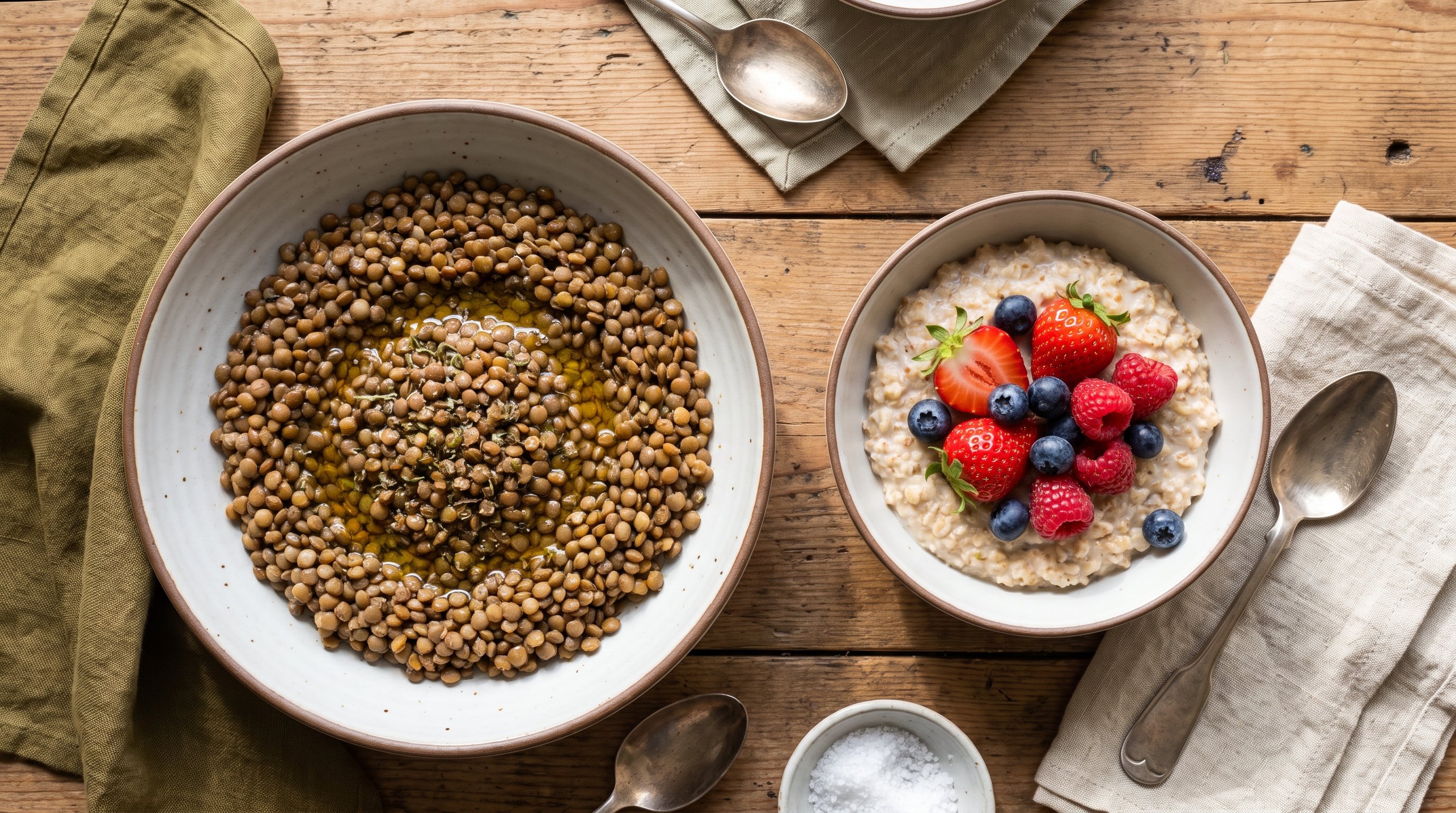
- Weekend - a slower cooked meal built around beans, lentils or chickpeas, plus whatever vegetables are in the fridge
The point isn't to follow this exactly. It's to notice how many different plant foods pass through your week, because variety matters more than any single ingredient.
How Much Fibre and Variety Actually Helps
Working Toward a Practical Target
Rather than counting grams of fibre, it helps to think in terms of plant variety across a week - different vegetables, fruits, grains, nuts, seeds and legumes each count separately.
Here is a rough guide to how often different plant groups might show up if you're aiming for variety rather than repetition.
| Food Group | Suggested Frequency |
|---|---|
| Vegetables | Most meals, rotating types |
| Legumes (beans, lentils) | Three to four times a week |
| Wholegrains | Most days, swapped for refined grains |
| Fermented foods | A few times a week |
| Nuts and seeds | Daily, small handful |

None of these numbers are a quota to hit perfectly. They're a direction to lean toward over weeks, not something to track meal by meal.
Why Food Variety Beats Cutting Out Food Groups
The harder route is an elimination diet - cutting out dairy, grains or entire food groups on the theory that fewer foods means fewer problems. The easier route is adding more plant variety without taking much away.
Elimination diets are hard to sustain because they shrink your options every time you eat out, cook for a family or just get tired at the end of a long day. Adding variety, by contrast, fits around whatever you're already eating.
Restriction fails because it asks for constant willpower. Substitution works because it asks you to notice and swap, not to white-knuckle your way through a meal.
Making Gut-Friendly Eating Fit a Normal Week
A busy week doesn't leave much room for elaborate food experiments, which is part of why small swaps work better than a strict new system.
Swapping one refined grain for a wholegrain, or adding a side of beans to a meal you already cook, takes a few minutes and doesn't need a separate shopping trip.
This is where a meal plan built around food you already like makes a difference, since No More Diet lays out Mediterranean-inspired meals that naturally bring in the fibre and plant variety this kind of eating relies on, without asking you to learn a new way of cooking from scratch.
Adjusting Gut-Friendly Eating for Your Life and Goals
If You're Just Starting Out
Start with one swap a day rather than overhauling every meal at once. Add a vegetable you don't usually buy, or swap white rice for barley, and let that be enough for the first week.
If You're Short on Time
Lean on tinned beans, frozen vegetables and pre-washed greens rather than anything that needs long preparation. Variety doesn't require fresh produce bought daily - tinned and frozen options count just as much.
If You're Over 50
Fibre intake often drops with age as portions shrink, so keeping legumes and wholegrains visible on the plate matters more, not less. A side of lentils or a handful of nuts is an easy way to keep variety up without eating more overall.
If You're Eating for a Family
Add variety to dishes everyone already eats rather than cooking separate meals. A bean-based bolognese or a grain swap in a rice dish changes the fibre content without changing what's on the table.
When Gut-Friendly Eating Starts to Feel Normal
Most people give this kind of change a week or two and expect a clear before-and-after. That's usually where people quit, because digestion and appetite settle in gradually, not on a schedule.
It helps to judge progress by how automatic the swaps feel rather than by any specific result. When reaching for beans or a different vegetable stops needing a conscious decision, the habit has taken hold.

Be patient with the pace rather than expecting a fast turnaround - consistency over weeks does more than any single perfect day.
Supporting Gut Health and Weight Management With No More Diet
Knowing that fibre and variety matter is one thing. Building a week of meals around that knowledge, without spending every evening planning, is another.
No More Diet gives you a customized book built around your goals and eating style, with Mediterranean-inspired recipes that bring in the plant variety and fibre this kind of eating depends on. It also includes a dedicated section focused on your specific goal, plus lifestyle and nutrition advice designed to work without overthinking every meal.

Eat Without Stress
Eat Clean Every Day
Bringing More Plant Variety Into Your Own Kitchen
Gut health and weight management don't need a dramatic overhaul - they need more plant variety showing up in meals you already cook, more often than not. Pick one swap this week, whether that's a new vegetable, a tin of beans or a wholegrain side, and let it become routine before adding another.
No More Diet can take the guesswork out of which swaps to make and when, with a plan built around how you actually eat.
FAQ
A varied, fibre-rich diet supports steadier digestion and appetite signals, which plays a part in how easy it is to manage weight over time. It isn't a standalone fix, and it works alongside the same basic principles of eating pattern and consistency that matter for weight management generally.
Fibre is a big part of it, but variety across different plant types matters as much as the total amount. Eating the same high-fibre food every day isn't the same as rotating vegetables, grains, legumes and fermented foods across the week.
Tinned beans, frozen vegetables and simple swaps in meals you already make get you most of the way there without extra cooking time. No More Diet's recipes are built to fit real schedules, so the variety comes from the meal plan rather than from extra effort in the kitchen.
Digestive and appetite changes settle in gradually as new habits repeat over weeks, not within a few days. Judging progress by how automatic the swaps feel, rather than by a specific result, makes the slower pace easier to stick with.
Share this post