How to Plan Your Week With the No More Diet Mediterranean Cookbook
By:Author:No More Diet Editorial
Updated on:October 20, 2026
- Step 1: Pick Your Meals for the Week
- Step 2: Shop Once, from One List
- Step 3: Prep a Few Building Blocks
- Step 4: Repeat What You Like
- Planning for a Household
- A Sample Week Template
- Planned Week vs. Deciding Each Night
- Myth: Some Foods Have Negative Calories
- What a Plan Can't Do
- How Long Until It Feels Easy
- Cooking from the No More Diet Cookbook
- Final Thoughts
To plan your week with the No More Diet Mediterranean cookbook, pick four or five recipes from your plan on the weekend, shop once from a single list, prep a few building blocks, and repeat the meals you like. Twenty minutes of planning saves a week of deciding.
That is the whole method. The rest of this guide is the detail: how to choose, how to shop, what to prep, and how to keep the routine going after the novelty wears off.
The book already does the hardest part. Its recipes are built around foods you said you like, with the ones you excluded left out, so you are planning from a list of meals you actually want to eat.
Step 1: Pick Your Meals for the Week
Sit down with the book once a week. Sunday works for most people, but any day you shop is the right day.
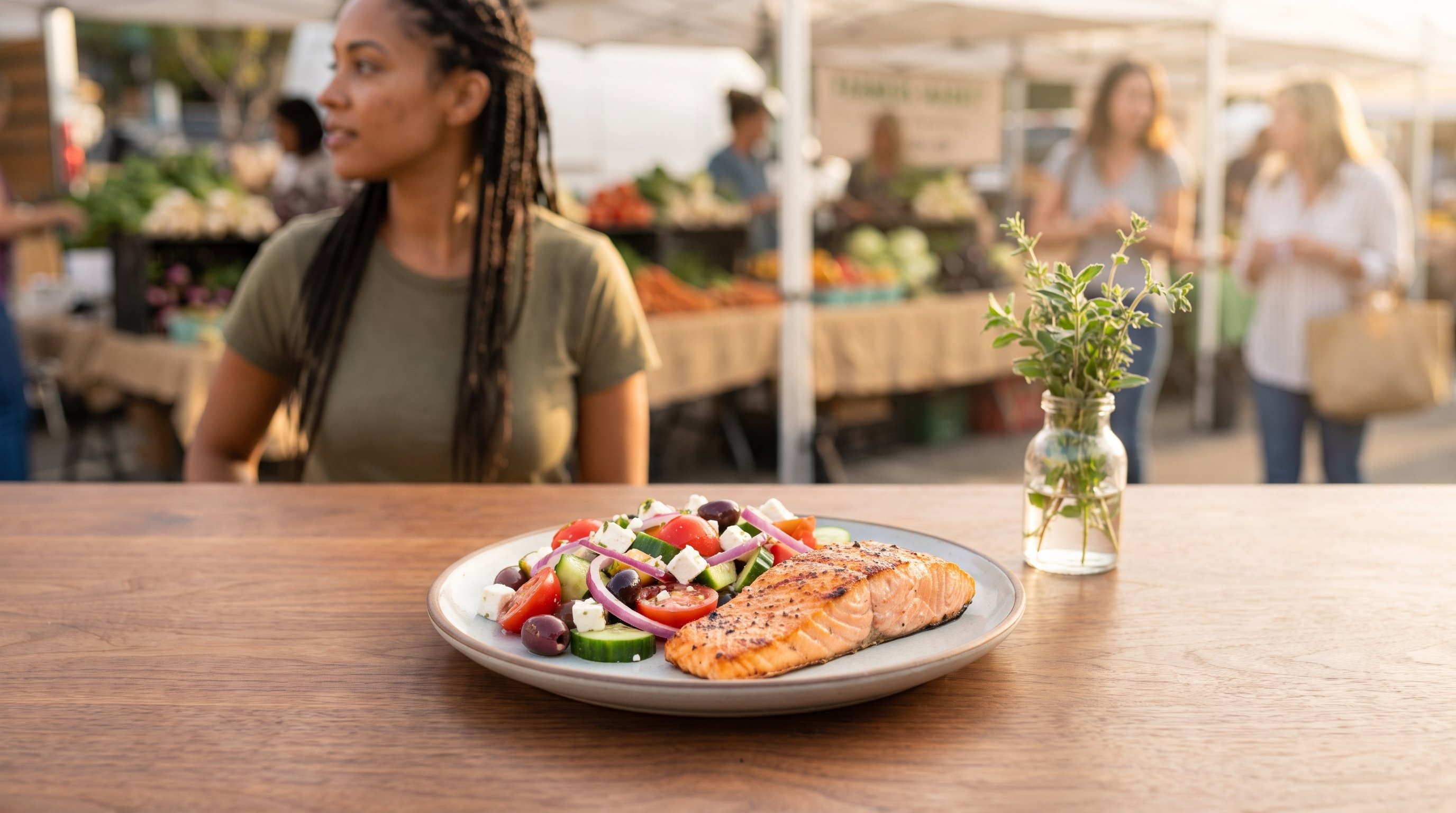
Step 1: Pick Your Meals for the Week
- Choose four or five dinners, not seven. Leftovers and one flexible night cover the rest.
- Choose one or two breakfasts and repeat them. Breakfast is where variety matters least and routine helps most.
- Plan lunches as leftovers wherever you can. Cook once, eat twice.
- Mix quick and slower recipes. The site says most meals take about 10-15 minutes, so save anything longer for a night you know is calm.
- Start with the recipes that look easiest. Early wins build the habit; ambition can come in week three.
If you are new to Mediterranean cooking, read the beginner's guide and your goal section first. They explain why the plan is shaped the way it is, which makes the choices easier.
Step 2: Shop Once, from One List
A plan dies at the supermarket more often than at the stove. One trip, one list, no improvising.
The companion app includes a shopping list built from your plan, which is the fastest route. If you prefer paper, write your list straight from the recipes you picked, grouped by aisle.
The book also includes budget shopping tips and a kitchen setup guide, worth reading once before your first big shop.
A few Mediterranean staples are worth keeping in the cupboard permanently, so each week's list stays short:
Step 2: Shop Once, from One List
- Olive oil, vinegar and lemon
- Dried herbs and spices you use often
- Canned tomatoes, beans, chickpeas or lentils (unless you excluded legumes)
- A whole grain such as rice, bulgur, farro or whole-wheat pasta
- Canned fish, if fish is on your plan
Adjust for your exclusions. If the quiz removed gluten, nuts or dairy, your staples should reflect that too.
Step 3: Prep a Few Building Blocks
You do not need a whole afternoon of meal prep. Thirty to forty-five minutes covering a few basics makes weeknight cooking far quicker:
Step 3: Prep a Few Building Blocks
- Cook one batch of grain for the first half of the week.
- Wash and chop sturdy vegetables such as peppers, carrots and onions.
- Roast one tray of vegetables to use across several meals.
- Make one dressing or sauce you can pour over anything.
- Portion proteins into meal-sized amounts so nothing goes to waste.
Then cook the recipes on the night. Building blocks shorten the work without leaving you eating the same reheated box five days running.
Step 4: Repeat What You Like
Here is the part most people skip: the meals you enjoyed go straight back on next week's list. A week built from favorites, with one or two new recipes, is a week you will follow.
You can add a new recipe whenever you feel like it. You just do not need to chase novelty every night.
Planning for a Household
Cooking for more than one person changes the maths, not the method.
Planning for a Household
- Scale the recipes, not the effort. Doubling a quick recipe rarely doubles the time, and the extra portion becomes tomorrow's lunch.
- Build a shared base, then customize the plate. A tray of roast vegetables and a pot of grains can turn into different plates for different people, with each adding their own protein or sauce.
- Let others pick one meal a week. People who chose the dinner are far less likely to complain about it.
- Keep your exclusions in mind. Your book already leaves out the foods you said no to, so if someone else in the house loves them, add them to their plate rather than the shared pot.
The goal is one plan that feeds everyone, not separate meals cooked side by side every night.
A Sample Week Template
This is a generic planning template, not a page from the book. Fill each slot with recipes from your own plan.
| Day | Breakfast | Lunch | Dinner |
|---|---|---|---|
| Mon | Breakfast A | Sunday leftovers | New recipe 1 (quick) |
| Tue | Breakfast A | Leftovers from Monday | New recipe 2 (quick) |
| Wed | Breakfast B | Leftovers from Tuesday | Building-block night: grain + roast veg + protein |
| Thu | Breakfast B | Leftovers from Wednesday | New recipe 3 |
| Fri | Breakfast A | Simple plate from staples | Flexible night: repeat a favorite or eat out |
| Sat | Slow breakfast | Something light | New recipe 4 (the longer one) |
| Sun | Breakfast B | Prep session + simple lunch | Favorite from last week, cooked double |
Four new recipes, two breakfasts, and every lunch handled by planning rather than willpower. Swap days around to match your schedule.
Planned Week vs. Deciding Each Night
| Factor | Planned week | Deciding each night |
|---|---|---|
| Time spent deciding | About 20 minutes once | A little every evening, when you are tired |
| Shopping trips | One main trip | Several small ones, plus takeaway |
| Food waste | Lower, because everything has a job | Higher, because ingredients wait for a plan |
| Sticking to the plan | Easier; the decision is already made | Harder; you decide at your hungriest |
| Variety | Chosen deliberately | Usually the same three fallback meals |
Planning is not about rigidity. It is about making the decision once, when you are calm and fed, instead of every evening at 7pm.
Myth: Some Foods Have Negative Calories
You may have heard that celery, cucumber or grapefruit take more energy to digest than they contain. It is a myth.
Digestion uses only a small fraction of the energy in any food, so no food leaves you with a deficit just by being eaten.
It also leads people to plan badly. A week built on "free" foods leaves you hungry by mid-afternoon, and hunger is what ends plans.
The better approach is the Mediterranean one: plates built on vegetables, legumes, whole grains, fish and olive oil, which fill you up and taste good. Vegetables earn their place by adding volume, fiber and flavor, not by working magic.
So plan full, satisfying meals, not "negative" ones. Being properly fed is what lets you stick with the week.
What a Plan Can't Do
A cookbook is a plan, not a result. It can make good meals easy to choose and quick to cook, but the cooking is still yours.
No recipe burns fat, and no week of planning replaces medical advice. If you have a health condition, allergy or particular dietary needs, check with a doctor or dietitian before changing how you eat.
How Long Until It Feels Easy
The first planned week takes the longest, because you are learning the book. By the second week you know which recipes you like.
By the third, the shopping list mostly writes itself, and planning shrinks to a few minutes.
That third week is also where many plans fade, so protect it. Repeat favorites, keep the flexible night, and do not add five new recipes just because the first two went well.
The early wins are practical - less stress, less waste, better dinners - and the rest builds from there.
Cooking from the No More Diet Cookbook
The cookbook is built from a quiz about your goals and the foods you like and avoid, so your weekly plan starts from meals you will actually cook. It comes as a paperback or ebook, and the companion app adds the shopping list, daily challenges and trackers that make weekly planning quicker.
Start the quiz at nomore.diet
Eat Without Stress
Eat Clean Every Day
Final Thoughts
A good week of eating is decided on the weekend, not at 7pm on a Wednesday. Pick a handful of recipes, shop once, prep a few basics, and repeat the ones you love.
Start small: four dinners, two breakfasts, one list. Once that feels easy, you have a routine, and a routine outlasts any diet.
FAQ
Four or five dinners and one or two breakfasts is plenty for most people. Leftovers and one flexible night cover the rest without extra cooking.
Yes. The quiz lets you exclude groups such as meat, fish, seafood, eggs or dairy and ingredients such as nuts, legumes or gluten, so the recipes you plan from already reflect that.
No, you can plan entirely from the book with a paper list. The app's shopping list simply makes the shopping step faster.
Move it to the flexible night or the next day; the ingredients will usually keep. One missed meal is not a missed week, so pick the plan straight back up.
Share this post