How To Start Eating Mediterranean: A Realistic First Week
By:Author:No More Diet Editorial
Updated on:October 18, 2026

- The First Steps to Take Before You Change Anything Else
- How Often to Rotate These Foods Through Your Week
- Making Mediterranean Eating Fit a Week That's Already Full
- A Four-Week Plan for Easing Into This Way of Eating
- Where People Tend to Lose Momentum
- Mistakes That Make Starting Mediterranean Harder Than It Needs to Be
- Making the Switch to Mediterranean Eating Easier With No More Diet
- Starting With One Meal Instead of a Whole New Diet
The quickest way to start eating Mediterranean is to swap one thing at a time instead of replacing your whole kitchen in a weekend. Trade butter for olive oil, add a vegetable to meals you already cook, and put fish or legumes on the table twice a week.
This works because the Mediterranean pattern is built on substitution, not elimination. You're not removing food groups, you're changing which fats, proteins and carbs show up most often on your plate.
This guide covers the first steps to take, how often to make changes, a four-week starter plan, where most people stall, and how to keep going once the novelty wears off.
The First Steps to Take Before You Change Anything Else
Before buying new ingredients or rewriting your meal plan, get these basics sorted first. Order matters more than speed here.

Steps to Start Eating Mediterranean
- Swap your main cooking fat - replace butter or vegetable oil with olive oil for sautéing, roasting and dressing.
- Add one vegetable to dinner - pick a meal you already cook and add a side salad or roasted vegetables.
- Pick two fish or legume nights - choose two evenings a week to build dinner around fish, beans, lentils or chickpeas.
- Keep fruit visible on the counter - swap packaged snacks for fruit, nuts or yoghurt within easy reach.
- Reduce red meat frequency - treat red meat as an occasional ingredient rather than the default protein.
- Cook one extra portion - make enough at dinner for a simple lunch the next day.
- Repeat before adding more - stick with these swaps for a week before introducing new ones.
None of these steps demand a special shopping trip or a strict schedule. They simply nudge what's already on your plate in a different direction.
How Often to Rotate These Foods Through Your Week
You don't need every Mediterranean staple every day. Some foods belong in daily meals, others work well a few times a week.
A Simple Weekly Guide
Use this as a loose target, not a rulebook you have to hit exactly.
| Food | How Often |
|---|---|
| Olive oil | Daily, as main fat |
| Vegetables and fruit | Most meals |
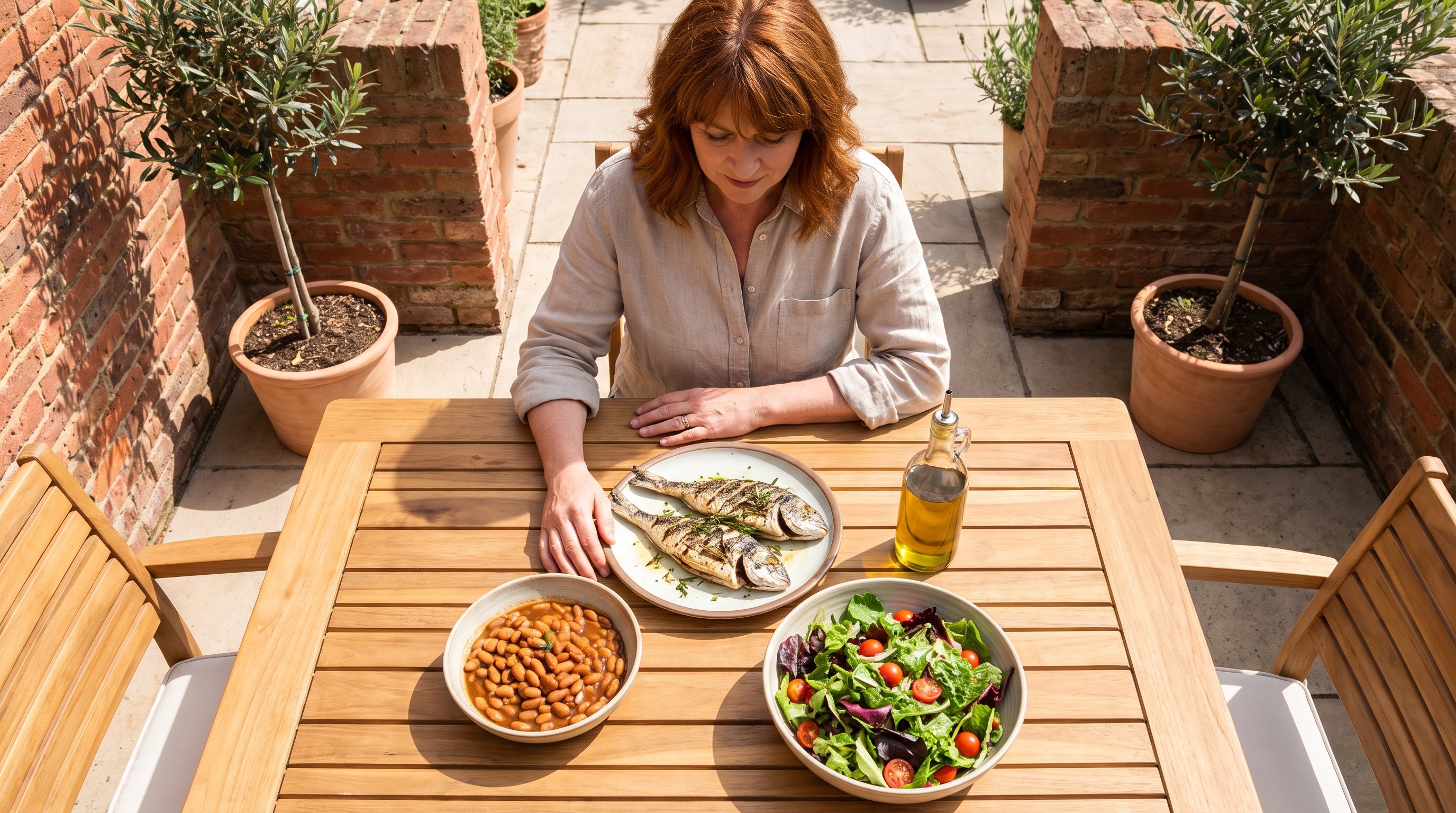
| Legumes and beans | 2 to 3 times weekly |
| Fish or seafood | 2 times weekly |
| Red meat | Occasionally, not default |
If a week goes a bit off this pattern, the next week simply evens it out. There's no streak to protect.
Making Mediterranean Eating Fit a Week That's Already Full
Most weeks are already booked solid, which is exactly why small swaps work better than a full meal overhaul. Changing the oil you cook with takes no extra time at all.
Batching a pot of beans or roasting a tray of vegetables on a quieter evening means two or three meals are half-done before a busy day even starts.
A meal plan built around food you already like makes this easier to sustain, because you're not learning a new cuisine from scratch, you're adjusting the one you already cook.
No More Diet works from this same idea: tailored recipes and a customized plan built around your goals, so you're adapting familiar meals instead of starting over.
A Four-Week Plan for Easing Into This Way of Eating
The order of changes matters more than how fast you move through them. Here's a sequence that builds on itself.
| Stage | What To Focus On |
|---|---|
| Week 1 | Swap cooking fat to olive oil |
| Week 2 | Add vegetables to every dinner |
| Week 3 | Introduce two fish or legume nights |
| Week 4 | Reduce red meat and packaged snacks |
Each week keeps the previous changes in place while adding one more layer. By week four, the earlier swaps should already feel automatic.
Where People Tend to Lose Momentum
The first week or two usually feels easy because the swaps are small and the novelty is motivating. The harder stretch tends to come once the initial interest fades and old habits start creeping back in.
There's no fixed point when this way of eating starts to feel normal rather than deliberate. For some it happens quickly, for others it takes longer, and both are fine.
What tends to matter more than timing is whether the swaps stayed simple enough to repeat without much thought.
Mistakes That Make Starting Mediterranean Harder Than It Needs to Be
Trying to Change Everything in One Week
Overhauling breakfast, lunch and dinner all at once is exhausting and hard to sustain. Pick one or two swaps and let them become automatic before adding more.
Treating It As a Strict Rulebook
Mediterranean eating is a pattern, not a checklist you have to tick off perfectly. Missing a fish night doesn't undo the week, it's just one meal.
Buying Ingredients You Won't Actually Use
A pantry full of unfamiliar grains and spices often goes untouched. Start with vegetables, olive oil and proteins you already know how to cook.
Expecting One Meal to Undo a Bad Week
A single Mediterranean-style dinner doesn't cancel out a week of takeaway, and it doesn't need to. The pattern works through repetition over time, not through any one perfect plate.
Making the Switch to Mediterranean Eating Easier With No More Diet
Deciding to start eating Mediterranean is the easy part. Working out what to actually cook on a Tuesday night, without defaulting back to old habits, is where most people get stuck.
No More Diet gives you a customized book built around your goals, body and eating style, with Mediterranean recipes matched to your preferences instead of a generic list everyone gets. It includes a dedicated section focused on your specific goal, plus practical lifestyle and nutrition advice designed to work with a real schedule rather than an idealised one.

Eat Without Stress
Eat Clean Every Day
Starting With One Meal Instead of a Whole New Diet
Starting to eat Mediterranean doesn't require a clean slate or a strict start date. Pick the next meal you're about to cook and swap one thing in it, that's genuinely enough to begin.
If you want the swaps mapped out for you instead of figuring them out meal by meal, No More Diet turns this pattern into a plan built around food you already like.
FAQ
Swap your main cooking fat to olive oil and add a vegetable to one meal a day. Those two changes alone cover a large part of the pattern without any extra planning.
No, the Mediterranean pattern works through substitution rather than elimination. You're changing proportions and frequency, not cutting out entire food groups.
Start with swaps that take no extra time, like the cooking fat or batching a pot of beans on a quieter evening. No More Diet's recipes are built around your existing eating style, so cooking from scratch doesn't have to mean complicated meals.
Trying to change too much too fast is the most common reason people stall. Keeping the early swaps small and repeatable matters more than how quickly you add new ones.
Share this post